

Overview
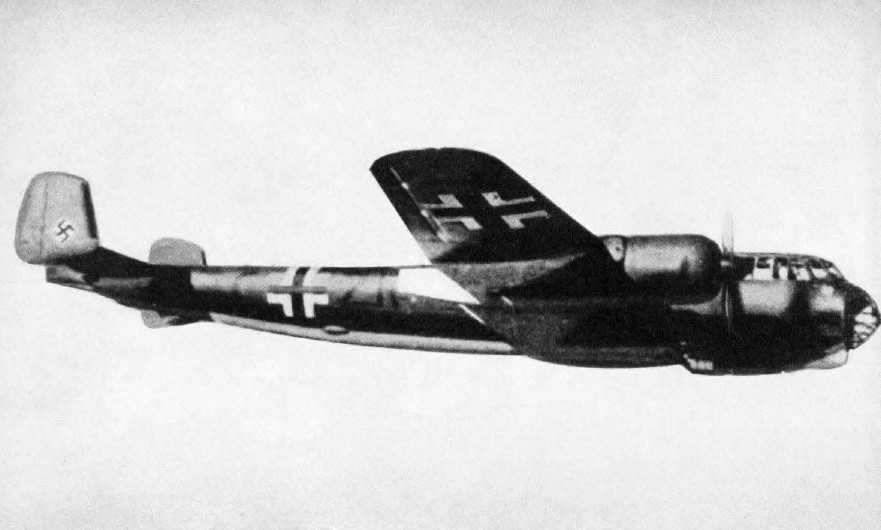
Carl Edon was born on 29 December 1972 in Middlesbrough, in north-east England, the youngest of three children of James Edon, a bus driver, and his wife Valerie. Almost as soon as he could talk, at about two, he began to say ‘I crashed a plane through a window’, and he repeated it often. He later added that the plane was a bomber, which he called a Messerschmitt, that he had been on a bombing mission over England, and that he had lost his right leg in the crash. His parents concluded that he was describing the life of a German airman killed in the Second World War.1
He said his name had been Robert, his father’s Fritz and his brother’s Peter, that his mother had been dark, bossy and bespectacled, and that he had died at 23, leaving a thin, blonde fiancée of 19. Watching a documentary about a concentration camp, he said his air base had been near it.1
Drawings, behaviour and birthmark
From the age of two or three he drew aircraft, badges and insignia, among them a plane with a reversed swastika and an eagle, and at six a cockpit panel, explaining the gauges and a red pedal that released the bombs. His parents kept none of the early drawings. He gave the Nazi salute, goose-stepped, stood stiffly upright, preferred coffee to tea and liked thick soups and sausages, wanted to live in Germany, and insisted on playing the German part in a school play. He was unusually tidy and, unlike his brown-haired family, very blond.1
He was born with a raised, dark mole in his right groin, which grew to about 2.5 cm and was removed early in 1993. His parents linked it to the lost right leg, though Carl never did, and he never limped or complained of pain there.1
Investigation
The magazine Woman’s Own reported the case in August 1982 and a Berlin newspaper in 1983, and Peter and Mary Harrison later included it in a book on children’s past-life memories.12 Dr Nicholas McClean-Rice interviewed Carl and his parents for Ian Stevenson in January 1984, when Carl was eleven. Stevenson then left the case for ten years before meeting the family in June 1993, and again, after Carl’s death, in October 1998. Because so much time had passed, he listed only statements the parents had reported by 1983, accepting that some detail would be lost.1
There were few books in the house and none about the war, and James Edon, sure that Carl was in bed before any war films came on, had to borrow library books to check his son’s answers. Valerie Edon’s father, who had fought the Germans in North Africa and hated them, died four years before Carl was born.1
Possible identities
No one was identified. One idea was the German father-in-law of James Edon’s brother, a pilot killed in the war, whose widow would tell the family nothing about him; Stevenson noted that this pilot’s daughter had lost two pregnancies before Carl was born. Another arose in November 1997, when pipeline work at South Bank, next to Middlesbrough, uncovered a Dornier 217E bomber that had hit a barrage-balloon cable and crashed on 15 January 1942, with the remains of its radio operator, Hans Mancke. The other three crew had been buried in 1942.1
Stevenson thought the Dornier a poor fit: it had not crashed into a building, and its pilot was not called Robert, nor was any of the crew. Carl had also named a Messerschmitt, not a Dornier.1 In 2013 Carl’s parents, shown a photograph of the crewman Heinrich Richter, concluded that he was the man Carl had been; James G Matlock has pointed out that Richter was not the pilot and that it is uncertain whose leg was severed.3
Later life and assessment
After the case reached the local papers, schoolmates teased Carl cruelly, calling him a Nazi, and by ten or eleven he had stopped talking about the previous life. By 1993 he seemed to have forgotten it. He left school at sixteen to work for British Rail, had a partner and a child, and was murdered in August 1995, aged 22; his killer was jailed for life.1
Stevenson regretted the delays, and above all the loss of the early drawings, which he thought had cost much detail. Even so, he concluded that genetics and upbringing could not explain the case and that reincarnation was at least a plausible explanation.1