

Overview
Esara Bhashitha Kauminda was born on 31 January 2002 in Dewundara, Matara, in southern Sri Lanka, the youngest of four children in a Sinhalese Buddhist family. A few days later his mother noticed a depression on the left of his chest. From about a year and a half he spoke of Kandy, a city about 300 kilometres north that the family had not visited, of the Temple of the Tooth and of a ‘Kandy mother’. He spoke of friends and two dogs, of a bomb at the temple in 1998, and of falling on a rock and drowning, and most of it he told to his older sister, who took notes.12
He screamed and ran from baths, and was frightened of funerals and funeral drums. Before he went to Kandy he drew a map of the city and his former home on a computer using Paint.1
The visit to Kandy
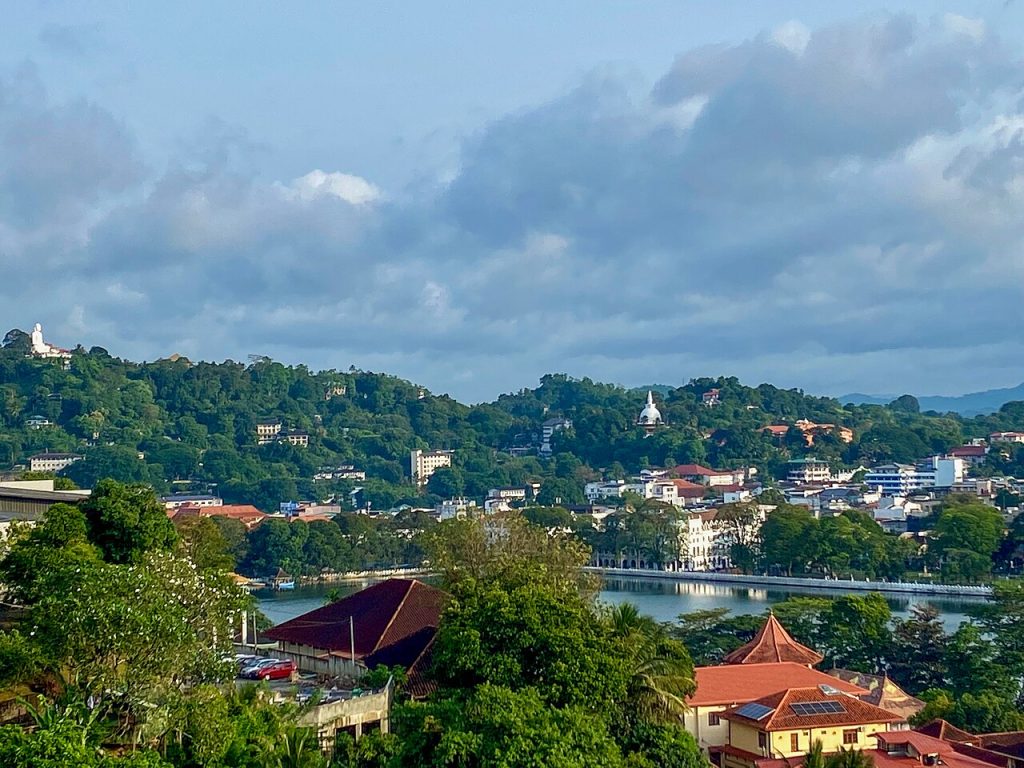
He was taken to Kandy on 15 September 2006, when he was four. At the Temple of the Tooth he moved about as if he knew it, explained the history of a statue, and impressed a monk who tested him, answering that in one direction lay a stuffed tusker and in another ‘a place you pay money to see’, correct for the temple’s elephant display and museum. He led the way on foot to a hilltop Buddha statue, then to a banyan tree by the market, where he grew emotional beside rubble and said he had lived there. It was later confirmed that a family had run an eatery in houses since demolished for a car park.12
The next day his family met that family’s mother at a Kandy hotel. He cried ‘amma’ and put his head on the table. When his mother mentioned the red shirt he had spoken of, she wept and said it was the last she had bought for her son.1
Thilanga Ranasinghe
Thilanga Madhushan Ranasinghe, born on 2 April 1986, attended Dharmaraja College in Kandy. A popular boy, he played cricket well enough to tour India, won an acting prize, and danced in the Kandyan style. On 31 January 2001 he skipped school with friends to go to the Mahaweli river and drowned with another boy, exactly a year before Esara’s birth. The coroner and postmortem recorded accidental drowning, with minor lacerations.1
His mother told the authors she prayed at the temple every day for months for him to return, gave up meat and gave to the poor. Esara, from infancy, could not keep down meat or fish.1
Behaviour and the chest
Esara’s fear of water ended right after the first visit to Kandy. He gave a friend of Thilanga’s a complicated handshake at six, and recognized a teacher and his former coach. Like Thilanga, he took to cricket, acting and Kandyan dancing, woke at 4 a.m. and loved a mix of sugar and milk powder. He became a television actor and won a jury award in 2017.1
A doctor who examined his chest at 19 found less muscle development on the left, giving an appearance of an indentation, while the chest x-ray was normal. Whether it matches an injury to Thilanga remains open, as the authors had not yet obtained the full postmortem report.1
Unusual claims
The report includes things outside the usual evidence. A schoolmate said he talked with Thilanga near the river at about 2:30 that afternoon, hours after the drowning. Esara told his sister that an ‘uncle’ in a carriage took him into the sky, and that he had been pushed. The authors read the statements to police as inconsistent with his account and suggest foul play, but the police did not pursue it, and Esara has declined to say more publicly.12
Assessment
The report was written by the investigators for the Bigelow Institute’s 2021 essay contest. It has not been published in a peer-reviewed journal as far as we know, and the sister’s notes are not reproduced in it. The authors, who conclude the case supports survival, relied on family accounts years after the events, as Esara was already 19, though they obtained police, coroner’s and school records. Nor were all statements right: the family owned a green car rather than a red van, and several people could not be identified. Esara and his sister told the story to The Reincarnation Records in 2026.12