

Overview
Disna Samarasinghe was born on 26 April 1959 in Udubogawa, a village about 32 kilometres from Kandy. Her father kept a shop and her mother taught at a nearby school. At about three, watching her mother wash clothes, she remarked that she used to do the same at her home in Wettewa, a village about 5 kilometres away, and pointed the right way. Over the following months she added that she had cooked and eaten alone there, and spoke of ‘Mahattaya’ and of ‘a woman’ she plainly disliked.1
Unlike many children in such cases, Disna did not want to go. She said Mahattaya had been harsh to her and had favoured his wife. Her mother’s curiosity won out, and Disna agreed once she was promised she would not be left behind.1
The visit to Wettewa
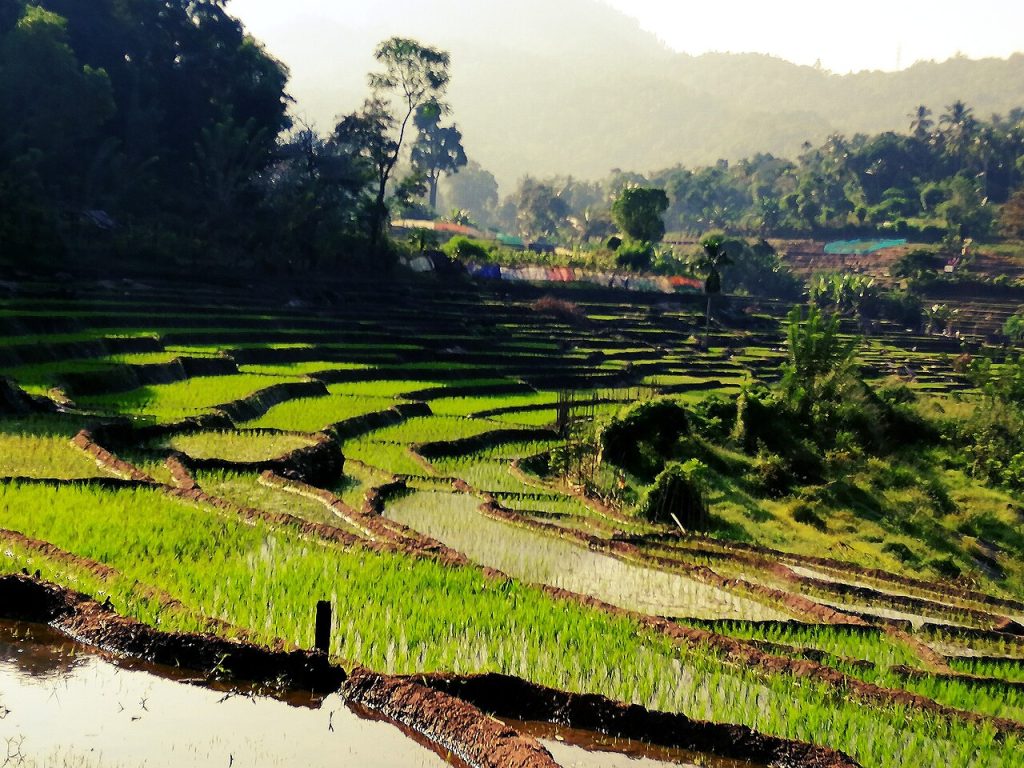
On 23 April 1964 Disna, her mother and three others walked to Wettewa. She took them by a shortcut across the paddy fields that her mother did not know, pointed out a house after passing several others, and said of a woman in the compound, ‘That’s the mother.’ She went in by a side door that could not be seen from the road. It was the one the old woman of the house had always used, being closest to where she washed.1
The woman in the compound was the wife of R. M. Gardias, whom everyone called Mahattaya. His mother, Babanona, had died in the house on 15 January 1958, fifteen months before Disna’s birth. Disna walked round the house and said of one bed, ‘This is where I died,’ and claimed a large rice dish and a drum as her own. Stevenson noted that one witness recalled someone asking ‘Is that the house?’ first, and that the recognition of a water pot may have been prompted. Disna’s mother wrote out a detailed account by about June 1964, and it agreed well with later testimony.1
Babanona's life
Babanona, born around 1886, married a man from the south against her parents’ wishes and later separated from him. Careful with money, she lent it at interest and hid it around the house, sometimes forgetting where. She was deeply devout. She disapproved of her older son’s marriage and refused to carry his children, spent two years living alone at Medagoda, and then, growing frail, moved to his house for the last six months of her life. The chief monk at Wettewa thought her son had been stern with her, while the son denied beating her and said he had threatened to beat himself when she would not take her medicine.1
The hidden money
Disna said that money had been buried in a cigarette tin near the fireplace. About three months after Babanona’s death, the Medagoda house where she had lived was being repaired when a tin with money in it was found near the hearth. No one had known it was there, and the family assumed she had hidden it. Disna herself hid small coins around her home.13
Behaviour
From about three to six, Disna hid from male visitors, a fear her parents linked to what she said about Mahattaya. She cooked rice better than her mother, and wove coconut leaves into roofing mats without being taught. She was unusually clean, devout for her age, and tied knots in her mother’s saris, as Babanona had kept money in a knot in hers. She was cool toward Babanona’s sons but warm toward the grandson who had once brought Babanona water and rice.1
Assessment and later life
Francis Story began the investigation in 1965 and later published his own account. Stevenson joined him in 1968 and returned several times up to 1976.12 The two families knew each other by sight but had no social contact. Stevenson found two people who knew both: the chief monk at Wettewa, and a shop customer who had been Babanona’s close friend but said he had never spoken of her there. Stevenson accepted this, while noting that such a man would suit anyone preferring an explanation by extrasensory perception. Some statements were wrong, including where Babanona’s husband came from.1
Disna stopped talking of the previous life by about six, and by eleven said she remembered nothing. When Stevenson last met her in 1976 she was a well-adjusted seventeen-year-old studying for her exams. Her file features in the third episode of The Reincarnation Records.13