

Overview
Jagdish Chandra was born on 4 March 1923 in Bareilly, in what is now Uttar Pradesh, the youngest of three sons of K. K. N. Sahay, a lawyer, and his wife Jamuna. On 6 June 1926, aged three years and three months, he asked his father to get him a motor car, and when asked where from, said his car was at the house of ‘Babuji’, who lived in Benares and was his father. By 11 June, answering his father’s questions, he had told a connected story of a life in Benares, about 500 kilometres away.1
Records made before verification
Sahay set out to test the story. He invited members of the Bareilly bar and other friends to talk with the boy, and decided not to send anyone to Benares, so that skeptics could not say details had been carried back to the child. Instead he wrote to the chairman of the Benares municipal board and then to the newspaper The Leader, which on 27 June 1926 published his letter. It described Babuji’s house, with a big gate, a sitting room and an underground room with an iron safe in the wall; evening gatherings in the courtyard where people drank bhang; Babuji’s massages and the powder or clay he put on his face; and two cars and a phaeton with a pair of horses.12
Replies confirmed most of it. The municipal chairman, a lawyer, recognized the description at once as Babu Pandey, also called Mathura Prasad Pandey, of Pandey Ghat, whose son Jai Gopal had died. A Benares lawyer related to Babu Pandey agreed it was mainly correct, though Babu Pandey did not own a car. On 28 July, before the boy was taken to Benares, a magistrate in Bareilly wrote down further statements in Hindi as he spoke them, including that his name was Jai Gopal and that his bigger brother, Jai Mangal, had died of poisoning. Of the 51 statements Stevenson tabulated, 36 were written down before any verification was attempted, and 24 of those were verified before the families met.1
The previous life
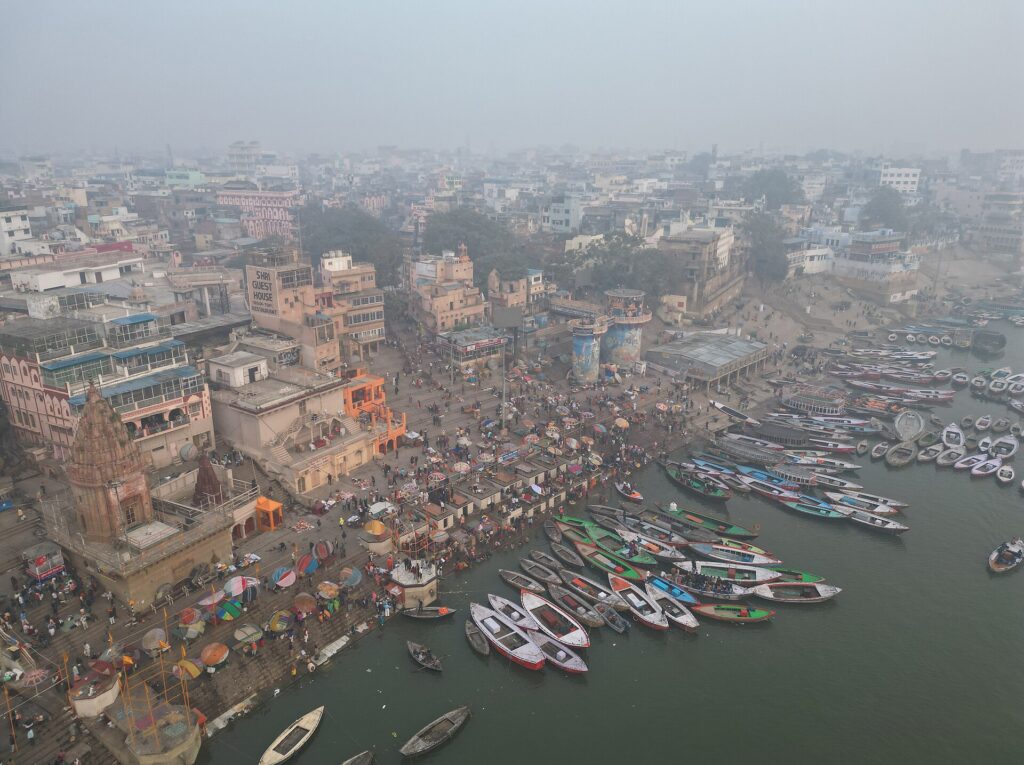
Babu Pandey was a panda, who looks after a bathing ghat on the Ganges and assists pilgrims, and he employed goondas, strongmen who pressed reluctant pilgrims to pay. His son Jai Gopal had died, probably in October 1922, some time after an older son, Jai Mangal, whose death was suspected to be accidental poisoning. Babu Pandey never admitted being Jai Gopal’s father, apparently because he wished to deny the case, and it was suggested he was the grandfather, but Jai Gopal’s sisters confirmed that he was the father.1
In August 1926 Sahay took Jagdish to Benares. According to Sahay’s account, he met there a panda whom he described as having been of lower rank than himself; Jagdish later said he had asked after Jai Gopal’s phonograph, which was remembered but had been taken away. Sahay published the case in a pamphlet, together with others he went on to study.12
Errors and discrepancies
Some details were wrong or garbled. Babu Pandey owned no car, though he used borrowed ones; Jagdish later said Jai Gopal’s mother told him a friend’s car was used to drive the boy about. Sahay’s letter said Babuji’s sons and wife had all died and he was alone, but the boy had told the magistrate that his ‘aunt’ lived with him, and Babu Pandey in fact had two living wives. Jagdish called Jai Gopal’s mother ‘Chachi’, aunt, which turned out to be what Jai Gopal had called both his mother and his stepmother. As an adult Jagdish told Stevenson that Jai Mangal had been younger, though as a child he had correctly said he was bigger.1
Investigation
Ian Stevenson learned of the case in 1959 from Sahay’s pamphlet and studied it between 1961 and 1973, by which time Sahay, Babu Pandey and Jai Gopal’s mother had all died. He interviewed Jagdish, his mother and his two older brothers in Bareilly, two of Jai Gopal’s younger sisters and his stepmother in Benares, and S. C. Bose, who had talked with Sahay and Jagdish in 1939 and later published an account based largely on what Sahay told him.13 Jagdish also gave Stevenson an account of his memories that he had written in 1960. In 1973 Stevenson inspected the Pandey house and found the marble flooring Jagdish had mentioned, and the family’s wrestling ground.1
Behaviour
The Sahays were Kayasthas and Babu Pandey a Brahmin, and as a child Jagdish behaved in ways his family saw as Brahmin. He insisted on eating before everyone else, would not let non-Hindus touch his food, disliked bearded men, refused onions, garlic and salty food, preferred to wear a loincloth and asked for bhang. He loved rabri, a milk sweet Babu Pandey had liked, and was keenly interested in cars, an interest his father may have reinforced by buying cars himself. Most of these habits faded in childhood, though he would not eat eggs until he was 23.1
Assessment and later life
Stevenson considered the case one of the best authenticated of its kind. The families lived about 500 kilometres apart and belonged to different castes; Jagdish’s mother had never been to Benares, and the boy spent nearly all his time inside the walled family compound, always accompanied when he went out. Sahay’s published statement that he had no relatives in Benares was not strictly true: a cousin and her husband lived about 4 kilometres from the Pandey house, and the family stayed with them in 1926, but they said they had never heard of Babu Pandey.1
Jagdish remained strongly attached to the previous family into middle age, when this lessened. He learned more about Jai Gopal’s life from Jai Gopal’s mother, and in 1969 told Stevenson he had checked for himself that she, not Babu Pandey’s other wife, was the one with the pockmarked face.1