

Childhood memories
Jenny Cockell was born in England in 1953.1 Her mother, Pat Nidd, told Mary Rose Barrington that before Jenny was four she came home from Sunday school asking why nobody had mentioned people’s other lives, and soon afterwards described a recurring dream of being an Irish woman who was dying, anxious about the children she was leaving behind.2 In Jenny’s own account the woman, Mary, lay in a bright, white-walled room away from home, struggling to breathe.1
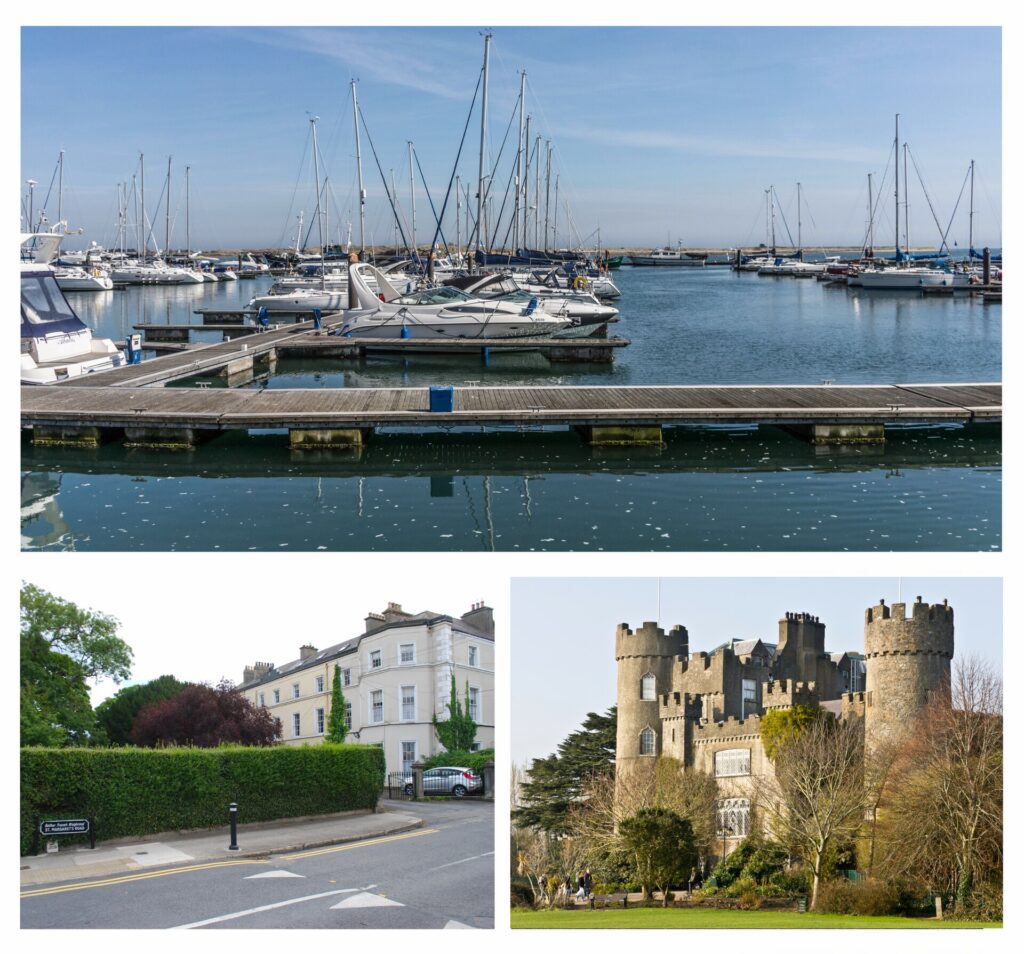
By day she recalled more: a small cottage, the first on the left on a lane running west from a village north of a city; a stream with a bridge beyond it; seven or eight children; and a husband who had been a soldier and later did skilled work with large timbers high up. She drew maps of the village throughout her childhood, and on the map of Ireland in her school atlas she kept being drawn to Malahide, just north of Dublin. At six she chose a blue-eyed doll she called Elizabeth, which proved to be the name of Mary’s last baby.12
The search
In 1980 Peter Gooding of the Towcester Bookshop obtained a map of the Malahide area for her and agreed that its roads matched the plan she brought in.12 In 1988 she had several tape-recorded sessions of hypnotic regression and began writing to strangers near Malahide, and a detailed street map showed that the lane in her memory was Swords Road.1
On her first visit to Malahide, in June 1989, she found a long-established butcher’s shop where she had placed one under hypnosis, and St Andrew’s, a Church of Ireland church whose plain gable end matched a drawing she had made. The cottage had gone. That autumn a local man, Mr Mahon, listed the families on the road in the 1920s: the only large family whose mother had died in the 1930s was the Suttons, whose children were sent to orphanages.1
A Dublin priest then sent her baptism records for six children of John and Mary Sutton, née Hand, of the lodge of Gaybrook House on Swords Road. Mary’s death certificate showed that she had died in the Rotunda Hospital, Dublin, on 24 October 1932, aged 35, a month after her last child was born. A letter Jenny placed in a Dublin newspaper led in April 1990 to one of Mary’s sons, whose family confirmed that Mary had left eight children.1
Hypnosis
Her hypnosis sessions proved less reliable than her waking memories. She gave the surname as O’Neil and the husband’s name as Bryan; he was John Sutton. Of four names she gave for the children, James was one son’s second name and Mary was the eldest daughter’s, but there was no Harry or Kathy, and the road came out as ‘Salmons’. Yet the butcher’s shop and St Andrew’s church had been described only under hypnosis.1 Reviewing the book, Ian Wilson stressed how much of this material was wrong, while giving more weight to her spontaneous memories.3
Meeting Sonny Sutton
In May 1990 Jenny telephoned Mary’s eldest son, Sonny, then 71 and living in Leeds, who at once confirmed that the cottage was the first on the left.1 Gitti Coats, a BBC Wales researcher preparing a documentary, then asked them not to be in touch while she took detailed statements from each.12 The program was dropped, and Jenny and Sonny first met on 23 September 1990, working through Coats’s comparison of their accounts, which ran to many typed pages.1
Sonny confirmed the cottage’s sagging roof and the wooden partition inside its door, the wall topped with stones set on edge, the wet meadows opposite and the small black dog. He was startled when she described a hare caught in the children’s snare and said it was still alive, as it had been. The soldier’s picture on the wall was of Mary’s brother, who died in India in the First World War; John Sutton had served in the Royal Dublin Fusiliers and worked as a scaffolder; and the market Jenny remembered was Moore Street in Dublin.1
Sonny also told her what she had not remembered: his father drank and beat his wife and children. After Mary’s death the baby, Elizabeth, was adopted by an uncle’s family, the other children except Sonny went to orphanages, and the family lost touch for decades.12
Barrington's investigation
Mary Rose Barrington of the Society for Psychical Research set out to test whether the book could be relied on as fact. In 1995 she interviewed Jenny, her husband, her mother, an uncle and aunt, a family friend, Peter Gooding and Sonny Sutton, while David Fontana interviewed Gitti Coats, whose notes went to the Society. All supported Jenny’s account, with small flaws that suggested to Barrington they had not been coached.2
Jenny’s mother confirmed the early talk, the doll, the town plans, and Jenny’s talk in her teens of waiting on a small jetty in a shawl. Sonny explained the jetty: as a boy he was rowed out to an island to caddy for golfers, and his mother would wait there for his return, an item Barrington found hard to put down to chance. No original childhood plan survived, but Barrington found that no other town on the Ordnance Survey map fitted it as Malahide did.2
Assessment and later life
Barrington weighed three explanations: hoax, chance, or a real connection with Mary Sutton. Jenny could in theory have researched the family first, but her files documented a step-by-step search, and a confession would sell better than anything she had written. Barrington saw no room for an innocent mixture of fantasy, false memory and cryptomnesia: the case rested on lies, on chance or on a link between the two women, and she judged that chance would have to stretch too far.2
Sonny told Barrington he believed Jenny was his mother reborn, though Susan Blackmore reported that he had seemed unconvinced when speaking to her. His siblings were more reserved, and some preferred to think that Mary was speaking through Jenny to reunite the family.12 With her help Sonny met his sister Betty in 1992 for the first time in about sixty years, and in 1993 five of the children were filmed with Jenny in Ireland. She told the story in Yesterday’s Children (1993); unusually, her memories had lasted into adult life.12