

Overview
İsmail Altınkılıç was born in 1957, probably on 30 September, in the Mıdık district of Adana in southern Turkey, one of eighteen children of Mehmet Altınkılıç, an illiterate farmer and part-time butcher, and his wife Nebihe. At about eighteen months, when his tired father told him to go away, he replied that he was not İsmail but Abit, and went on to name two wives, three children and several men who owed him money, and to describe how he had been killed.1
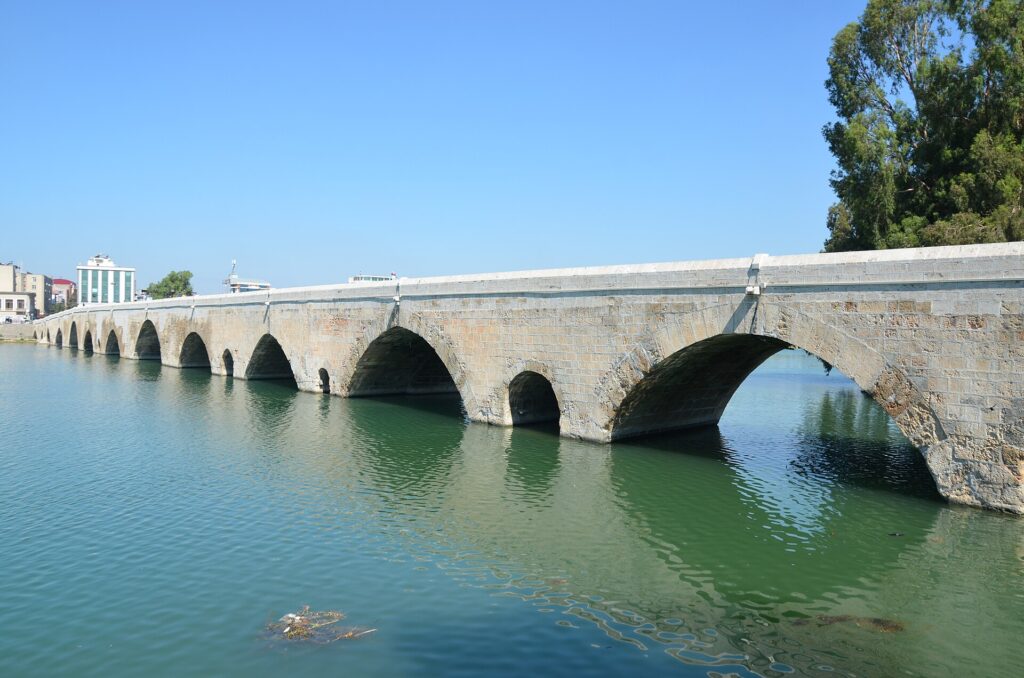
Abit Süzülmüş, a vegetable farmer of the Bey district of Adana, had been murdered on the night of 31 January 1957, some eight months before İsmail’s birth, along with his second wife and two of their children. The case is closely tied to that of Cevriye Bayrı, a girl who remembered being that wife, Şehide.1
The previous life
Abit owned two houses and employed field-workers. His first wife, Hatice, had no children, so he took a second, Şehide, who had five; the wives lived in separate houses about 350 metres apart. That night one of his employees, Ramazan, lured him into the stable, saying an animal was sick, and killed him with a blow from a heavy blacksmith’s hammer. Şehide, who was in labour, went to look for him and was killed in the same way, as were the two youngest children. A son, Zeki, hid, and a daughter, Hikmet, survived. The killings stirred such feeling in Adana that the trial was moved to Ankara, and Ramazan was hanged in 1961.1
İsmail's statements
In a tape-recorded interview in 1964, Mehmet said that on that first evening İsmail named his wives as Hatice and Şehide and his children as Gülseren, Zeki and Hikmet, described the murder and named Ramazan as the killer. Other early statements added that Ramazan had lured him to the stable by saying an ox was lame, that Şehide was in labour and was killed too, with two of the children, and that he grew vegetables and fruit trees such as oranges and quinces. Stevenson believed all of these were made before the families met over the case. Not all were exact: İsmail spoke of a son called İsmet, but İsmet was a girl.1
Before İsmail was born, a neighbour dreamed that Abit was sitting in Mehmet’s house and refused to leave with three men who called him, and her husband then told Mehmet that the coming baby would be Abit reborn. Stevenson noted that the family was therefore to some extent prepared for İsmail’s claims.1
Recognitions
Abit’s widow Hatice and daughter Gülseren came to see İsmail, and when he was about three his father let him lead the way to Abit’s home. Mehmet expected him to head for the house he believed was the scene of the murder, but İsmail went to the other, where it had actually happened. In the stable he noted that a wooden bed was missing and, according to Zeki, said the killers had put Abit’s body under it.1
He also recognized friends of Abit’s. Raşit Tatlıcı, an ice-cream seller, said the boy stopped him in the street, called him ‘kirve’ and named Raşit’s wife and several of his children (the father’s version of the meeting differed); Abit was to have sponsored Raşit’s son at his circumcision, so İsmail had the relationship reversed. In a shop İsmail sat on a chair kept for Abit and said he owed the owners 100 lira. He said a man called Sabit owed him money, and Sabit Deveci confirmed a private debt of 200 to 300 lira to Abit. He also told Abdürrezzak Baydar that Baydar owed him money, which Baydar confirmed.1
Investigation
After press reports in August 1962, the Turkish researcher Reşat Bayer investigated in December 1962 and 1963, and Ian Stevenson joined him in March 1964, his first Turkish case. They returned several times up to 1973, and Bayer again in 1975. Nearly 40 people were interviewed, the longest list of informants for any case Stevenson had investigated. Stevenson listed 49 statements and recognitions, of which he placed the first 24 before the families met; most of the rest came later, some when local people tested the boy.1
The two families were not entirely strangers: Stevenson noted some earlier acquaintance, and İsmail’s uncle Mahmut had been Abit’s farming partner and drinking companion. At about five, when Mahmut was about to slap him, İsmail reminded him of their nights drinking rakı in their garden and the girls they had brought, details Mahmut thought no one else knew.1
Payment and allegations
İsmail’s father was the main witness for the early statements, since his mother, who spoke only Arabic, added little. Mehmet also asked to be paid. An earlier visitor had promised him 500 lira and another had paid him 100, and Stevenson and Bayer paid him 50 lira in 1964 and again in 1967. The İskender brothers, whom İsmail named as debtors, alleged that Mehmet had coached the boy and pressed them for Abit’s debts, and Gülseren said he had prompted İsmail to pick out her brother and sister, which Zeki and Hikmet both denied. Hikmet had heard that Mehmet and İsmail tried to collect money from Abit’s debtors. Bayer, who condemned Mehmet’s greed and questioned the case in his 1965 book, advised Stevenson not to publish it.12
Stevenson's assessment
Stevenson did not condone the payments but did not think they had shaped Mehmet’s account, which stood up well against other witnesses. He judged that the İskender brothers had almost certainly owed Abit money and had more reason to lie than Mehmet, and he left the disputed recognitions of Abit’s children out of his list.1
To test the case further, in 1973 Stevenson sent an assistant, Yaşar Atakam, unknown in the district, to chat informally with earlier witnesses, new informants and the headmen of both districts. He heard nothing new against the case, and in general what he heard supported it; even Mahmut, who had once asked for money to be interviewed, backed it without payment. On that basis Stevenson decided to publish. He urged readers to study the case alongside Cevriye Bayrı’s, which he thought free of the same suspicions. He last interviewed İsmail and his father in September 1973.1