

Overview
Ma Tin Aung Myo was born on 26 December 1953 in Nathul, a village in Kyaukse District, Upper Burma, the fourth daughter of U Aye Maung, a railway porter who died in 1963, and Daw Aye Tin, who later sold meals and fruit at the nearby railway station. Ian Stevenson noted that she made no statements that could be verified, so the interest of the case lies almost entirely in her behaviour, which he thought resembled that of a Japanese man more than that of a Burmese girl.1
While pregnant, Daw Aye Tin dreamed three times that a stocky Japanese soldier, in shorts and without a shirt, followed her and said he would come to stay with the family. In 1972 she said she recognised him as an army cook she had befriended during the war, and in 1981 that they had swapped ideas about cooking. In 1975, however, she recalled neither the dream nor any friendship with a soldier.12
Investigation
Stevenson’s colleague U Win Maung heard of the case from the village elder, U Hla Baw, in September 1972 and took down a statement from Ma Tin Aung Myo. He and Stevenson visited Nathul in November 1972, when she was away, and in 1974 and 1975, interviewing six people: her, her mother, two sisters, her brother and U Hla Baw. U Win Maung went back in January 1977 and May 1981.1
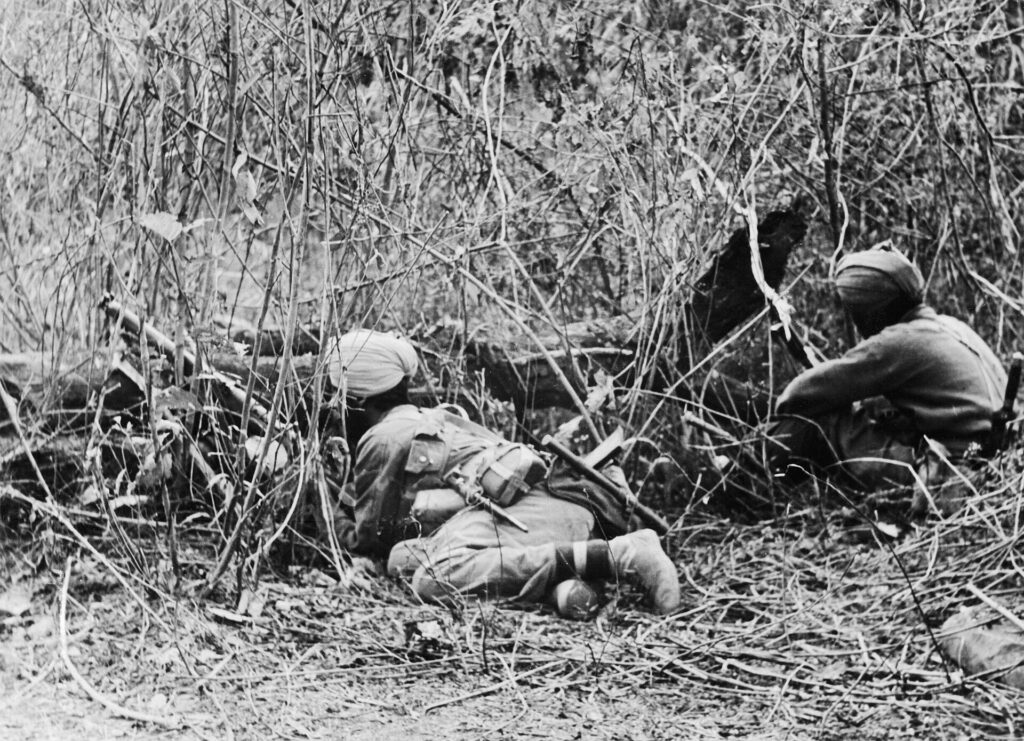
A Japanese unit occupied Nathul from 1942, and because of the nearby railway station Allied fighter-bombers attacked the area, for a time twice a day, strafing anyone they saw on the ground. The British took the station on 23 March 1945, so Stevenson reasoned that if the memories were real the soldier died before then, at least eight and a half years before she was born. Her mother had not heard of a soldier killed as she described, and with no names to follow up, the soldier could not be traced.1
What she said
According to her oldest sister, the first sign came at about four, when an aircraft flew over as she was walking with her father: she cried that she wanted to go home and said aircraft would shoot her. Soon afterwards, found weeping, she said she was ‘pining for Japan’, and gradually described being a Japanese soldier from northern Japan, married with children and stationed in Nathul. About to cook beside a woodpile near an acacia tree, some 75 metres from her family’s house, he had taken off his shirt when an aircraft dived and fired; he ran round the woodpile but was hit in the groin and died at once.12
She gave no names. In 1974 she added that he had had five children, the eldest a boy, had kept a small shop before joining the army, had been an army cook, and had died as the Japanese were leaving Burma. She said the aircraft had two tails; Stevenson noted that the United States air force flew twin-tailed aircraft in the region.12
Behaviour
Her fear of aircraft was intense: she would cower and cry when one passed over, and at about nine she ran crying into the house when a helicopter landed near the village. On cloudy days she hid behind a door and said she wanted to go to Japan, where her children were. She disliked the heat and the spicy food, asked for sweetened curries and liked half-raw fish. As a small child she used words her family could not understand, but no one checked whether this was a real language; her mother said she was slow to learn Burmese, though Stevenson’s 1977 article says she learned it readily. She was left-handed, as she said the soldier had been.12
Gender identity
From early childhood she refused girls’ clothes, wore her hair short, played at soldiers with boys and asked her father for toy guns, which none of her siblings did. Her mother, who scolded her about her clothes, denied encouraging her, although both parents had hoped for a boy. At about eleven, when her school insisted she come dressed as a girl, she left. She added ‘Myo’ to her name to make it more masculine, and as an adult she dressed as a man, said she would never marry a man, had girlfriends, and asked to be addressed with the male honorific Maung, or simply as Tin Aung Myo, rather than the female Ma.12
In his 1977 article Stevenson wrote that she did not fit Western psychiatric categories easily: she dressed as a man, he thought, because she considered herself one. Asked why her sex had changed, she gave different answers at different times: the shot to the groin, a wish of the soldier’s to change sex, and punishment for his treatment of girls. Stevenson noted that the last two drew on common Burmese Buddhist ideas.12
Birthmark
Stevenson did not see the birthmark himself, and the accounts differed. Her mother remembered a mark on one thigh at birth. One sister described an itching sore in the groin that closed up by the age of two or three, and later a brownish, thumb-sized patch just above the genitals; U Hla Baw also remembered a darkish patch in the groin, where she said the soldier had been hit.1
Assessment and later life
The case is unsolved, and Stevenson used it chiefly as an example of how a culture that accepts rebirth can account for a child’s strong identification with the other sex. By 1974 she said she had forgotten most of what she once remembered, and he considered that she might by then recall only what her family said she had told them. Her fear of aircraft faded in her late teens, she came to eat Burmese food and no longer wished to go to Japan, but her male identity did not change. In May 1981, aged 27, she was living with a girlfriend in another town and talked of joining the army.12 Ohkado Masayuki later studied Burmese cases of children who claimed to have been Japanese soldiers.3