

Overview
Kemal Atasoy (called KA in the published report) was born in 1991 in Hatay, in south-central Turkey, the only son of well-educated, upper-middle-class Alevi parents; his father was an accountant. Claimed memories of previous lives are regarded as a mark of the Alevi, but his parents attached little importance to his, listening with tolerant amusement and making no attempt to check them. He made a few statements soon after he began to speak and most from about the age of two and a half. Nothing he said was known outside the family.1
What he said
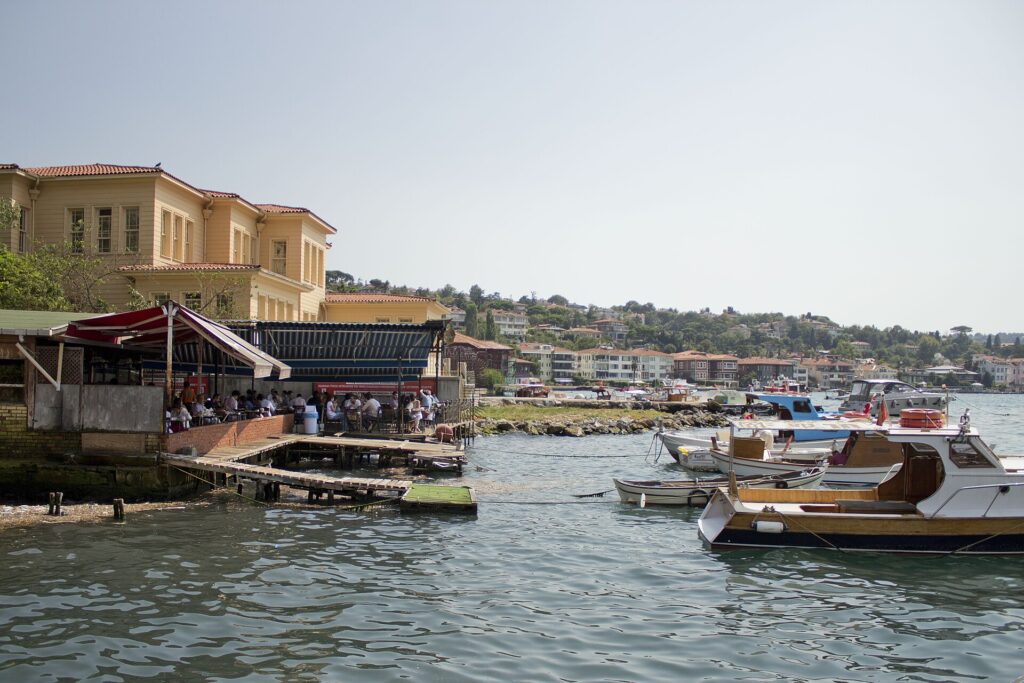
Jürgen Keil met Kemal in April 1997, when he was six, through an interpreter who knew his parents. With his mother present, and his father for part of the time, Keil took notes as the interpreter translated; he made no audio recording, finding that a tape recorder distracted children. Kemal spoke clearly and confidently. He said his family name had been Karakas and he had been a rich Armenian Christian living in a large three-storey house in Istanbul, at the water’s edge where boats were tied up, with a church behind it, next door to a woman called Ayşegül. People called him ‘Fistik’. His wife and children had Greek first names and they had married in Bodrum. He often carried a large leather bag and lived in the house only part of the year. He had been shot with a pistol, his wife had a hand in it, and his youngest son had been killed as a rally driver.1
Kemal had had a mark on his chest, which he said was where the bullet struck; his parents noticed it only after he began talking about it at about three, and it had gone by the time Keil saw him.1
Investigation
The family had no friends or relatives in Istanbul and knew no Armenians. Kemal and his mother had never been there, and his father had made only two same-day work trips. The key clue was Ayşegül, an art dealer who had left Turkey amid legal trouble and been in the news. Kemal’s parents said he had named her too young to have picked it up, but Keil could not rule this out. In April 1997 he found her house in the Çengelköy district, on the Bosphorus, and next to it an empty three-storey house that fitted Kemal’s description, but no one remembered an Armenian there, and in October 1997 an Armenian church official said there were no records of one. An elderly resident, however, insisted that an Armenian had lived in the house.1
In October 1998 Keil met a local historian, Toran Togar, born in 1924, and asked what he remembered about the people in the house without mentioning a child. Togar said a rich Armenian Christian named Karakas, the only Armenian in the area, had spent summers there. His wife came from a Greek Orthodox family called Yordan, which disapproved of the marriage, and there were three children. The Karakas family dealt in leather goods, Karakas often carried a large leather bag, there was talk that his wife was involved in his death, and he died in 1940 or 1941. Older men later said the house had been known as Yordan’s house, and Keil then noticed a Greek Orthodox church behind it.1
The statements
Keil and Jim B Tucker counted fifteen statements as correct and three as partly confirmed: the wife’s family was Greek Orthodox, though the names were unknown; ‘Fistik’ is an Armenian term for a nice man, little known to other Turks; and local talk linked the wife to his death. The shooting could not be checked; Armenian church records had burned in 1957, and a search of a newspaper from the time found nothing. Togar knew of no link with Bodrum and remembered the wedding procession in Istanbul. The rally-driver son does not fit the dates, as the children must have been young when Karakas died. Two further correct details, the name Çengelköy and the wife’s family name, were left out because Kemal may have heard them from Keil first.1
Assessment and later life
Keil and Tucker noted that the distance of 850 kilometres and the gap of about fifty years were both unusual, the median in their files being 14 kilometres and 16 months, and that this was one of only 33 cases among some 2,500 at the University of Virginia where notes were made before the previous person was identified. They argued that the written record ruled out families crediting the child with more than he had said, and that the effort needed to find Karakas made it unlikely Kemal had overheard talk of him.1 Vitor Visoni later criticized aspects of the investigation, including reliance on an interpreter who knew the family and the lack of audio recording, but still considered the case strong; Keil and Tucker replied to each point.2
When Keil showed Kemal a photograph of the house taken from across the water, he thought he could pick out his room, but he claimed none of the new details and, asked whether his wife had been Greek Orthodox, said he did not remember. By 1999, aged eight, he knew he was forgetting.1