


Is reincarnation an unfamiliar concept?
In Western societies, particularly in English-speaking countries, reincarnation often appears foreign or esoteric. However, a growing body of data suggests its relevance is closer than assumed.
Empirical data on past-life memories
A pilot study by the Division of Perceptual Studies (DOPS) at the University of Virginia found that up to 6% of American families with children aged 3–10 reported a child speaking about a past life. In Japan, researcher Ohkado Masayuki found 4% of children showed the same thing. The numbers aren’t overwhelming, but they point to a measurable and persistent occurrence.
6%
of American families with children aged 3–10 report past-life talk
DOPS pilot study
4%
of Japanese children show the same pattern
Ohkado Masayuki
33%
of Americans believe in reincarnation
Pew Research, 2018
50%+
of the world’s tribal cultures hold reincarnation beliefs
Anthropological studies
A belief found across religions
Reincarnation is not confined to one tradition. It is central to several of the world’s major religions and appears in branches of others.
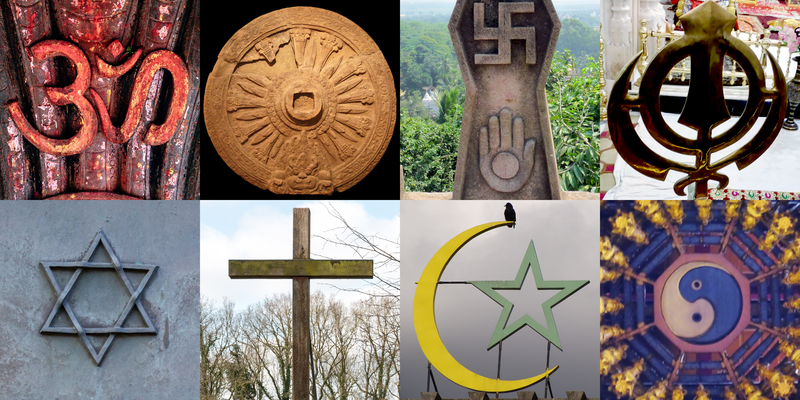
Dharmic religions
Buddhism, Hinduism, Jainism and Sikhism explicitly incorporate reincarnation into their theological frameworks.
Sects within Islam
Specific sects within Islam, including the Druze, Alevi and Alawites, also affirm reincarnation beliefs.
Jewish mysticism
Judaism, particularly in its mystical tradition (the Kabbalah), contains explicit references to reincarnation.
Evidence from tribal societies
Studies in anthropology show that at least half of the world’s tribal cultures hold reincarnation beliefs. A belief this widespread suggests an ancient origin.
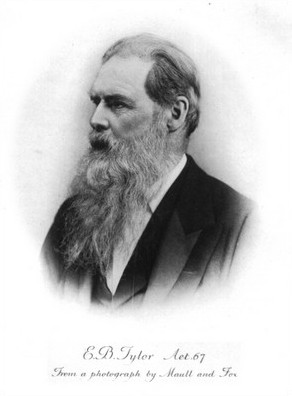
The father of cultural anthropology
Edward Burnett Tylor argued that such beliefs stemmed from consistent observations of phenomena like those examined in reincarnation research today.
Reincarnation belief in the West
Although reincarnation is often seen as peripheral in the West, recent surveys challenge that. A 2018 Pew Research survey found that 33% of Americans believe in reincarnation, and belief in European countries ranges from 20% to 40%.
Despite these numbers, reincarnation is largely absent from public discourse. Much like some social movements of past decades, reincarnation beliefs are often “closeted”, discussed only in private or in niche communities.
Emerging trends
The growth of online communities shows rising engagement with the topic. A Facebook group started by researcher James G. Matlock grew from under 10,000 members in its first six years to about 390,000 by September 2026. Newer groups started by Michael Smith have grown quickly too, with one passing 62,000 members within a year.
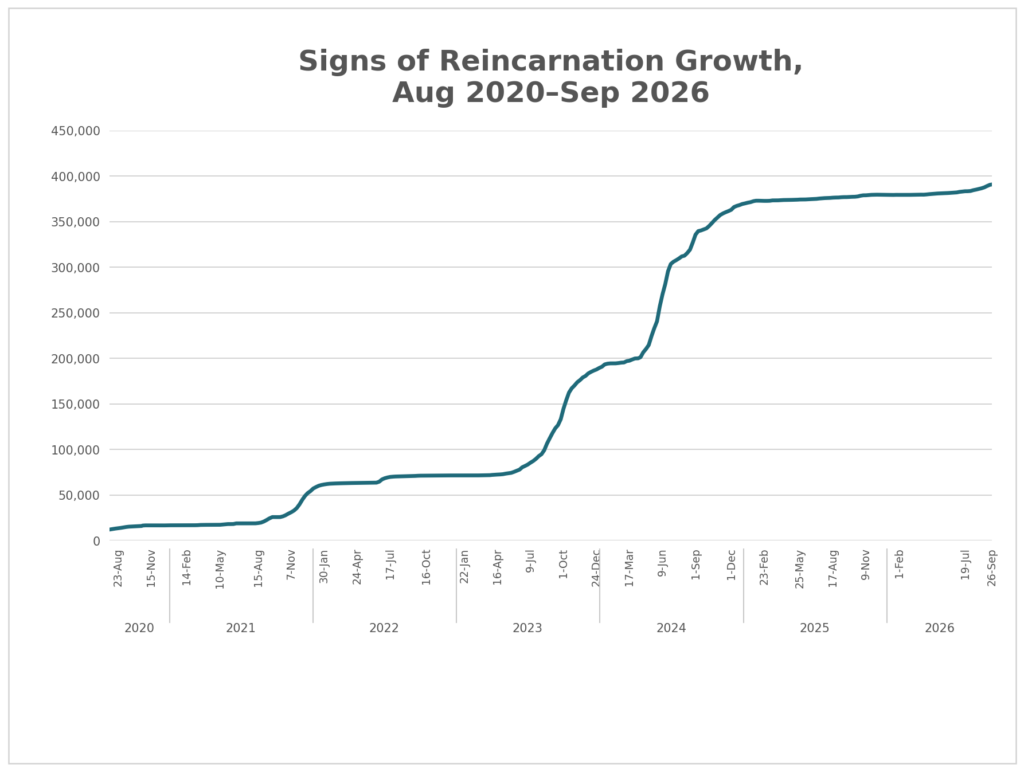
Google Trends data shows a steady rise in worldwide searches for “reincarnation”, in line with growing public interest.
In summary
Reincarnation beliefs recur across cultures, religions and centuries, which suggests they are more than a cultural artifact. Whether they come from observed phenomena or from deep cognitive and social patterns, their persistence deserves further investigation.